When it comes to storing fuels, chemicals, water, and other industrial liquids, the first major decision facility managers face is location: Aboveground Storage Tanks (ASTs) or Underground Storage Tanks (USTs). With installation costs ranging from tens of thousands to hundreds of thousands of dollars, making the wrong choice can have lasting financial and operational consequences.
At Mass Tank, we’ve helped engineers, facility managers, contractors, and others navigate this choice for decades. While both options serve important roles in different applications, ASTs offer clear advantages in most use cases — especially when it comes to cost, compliance, and long-term maintenance. USTs typically only make sense when space is severely limited or specific regulatory requirements demand underground installation.
This comprehensive guide examines every aspect of underground vs. aboveground storage tanks, from initial costs and regulatory requirements to long-term maintenance and safety considerations. Whether you’re managing a commercial fueling station, industrial facility, water treatment plant, or any other storage solution, our expert analysis will help you make an informed, confident decision that serves your operation for decades to come.
What Are Underground and Aboveground Storage Tanks?
Underground Storage Tanks (USTs) are underground storage systems where at least 10% of the tank’s combined volume (including piping) is buried beneath the ground surface. The EPA defines any tank system meeting this criterion as a UST, regardless of whether portions remain visible above ground.
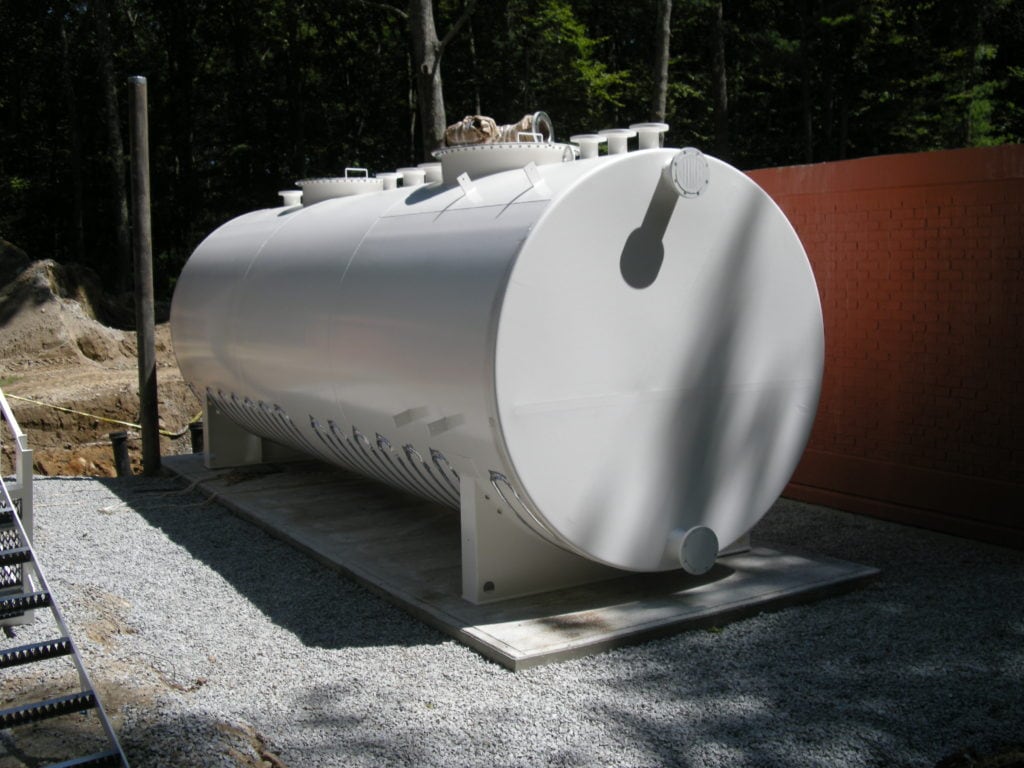
Aboveground Storage Tanks (ASTs) are aboveground storage tanks positioned entirely above the ground surface, typically mounted on concrete pads or elevated platforms. These tanks are fully visible and accessible for external inspection and maintenance.
Both tank types serve similar storage functions but operate under different regulatory frameworks and present distinct advantages and challenges for facility owners.
Why ASTs Make More Sense for Most Applications
Based on our decades of experience designing and installing storage systems across all industries, aboveground storage tanks provide superior value for the majority of applications. Here’s why facility managers consistently choose ASTs when space constraints don’t dictate otherwise.
Dramatically Lower Total Cost of Ownership
The financial advantages of ASTs extend far beyond initial installation savings. While UST installation typically costs 15-25% more due to excavation requirements, the real cost difference emerges over the tank’s operational lifetime. ASTs typically eliminate the need for complex monthly monitoring systems, specialized leak detection equipment, and costly underground repairs that can require complete excavation. Our clients report total ownership costs that are 30-40% lower for ASTs compared to equivalent UST systems over a 20-year period.
Unmatched Maintenance Accessibility
ASTs provide complete visual access to all tank components, connections, and potential problem areas. This accessibility translates directly into lower maintenance costs and reduced downtime. Facility managers can conduct routine inspections without specialized equipment, quickly identify developing issues before they become major problems, and perform repairs using standard tools and contractors. Underground tanks, by contrast, require specialized testing equipment, certified technicians, and often excavation for anything beyond basic monitoring.
Regulatory Compliance Simplification
While both tank types face regulatory oversight, AST compliance is significantly more straightforward. ASTs typically fall under SPCC regulations and local fire codes, which focus on spill prevention and fire safety — areas where facility staff can maintain direct control. UST regulations involve complex EPA requirements, including monthly leak detection monitoring, annual testing protocols, operator training certifications, and financial responsibility insurance. The regulatory burden for USTs often requires dedicated compliance staff or expensive third-party services.
Operational Flexibility and Future-Proofing
ASTs excel in environments where operational needs are constantly evolving. They can be easily relocated, modified, or expanded without major excavation projects. This flexibility proves invaluable for growing businesses, changing product lines, or facility expansions. Many of our clients have modified or upgraded their AST systems multiple times over their operational lifetime — modifications that would be prohibitively expensive with underground systems.
Enhanced Safety Through Visibility
The complete visibility of AST systems creates inherent safety advantages. Operators can immediately spot leaks, structural issues, or equipment problems during routine walkarounds. This visual monitoring capability often prevents minor issues from escalating into major safety incidents or environmental problems. Emergency response teams also have direct access to shut-off valves, connections, and monitoring points without excavation delays.
Mass Tank specializes in custom-fabricated ASTs for every industry — from fuel and chemical storage to potable water and fire suppression systems, as well as many other storage solutions. We design and build tanks that meet your exact specifications, with insulation, coatings, fittings, and certifications built in from the manufacturing stage.
When Underground Storage Tanks Are the Right Choice
While aboveground tanks offer many operational advantages, underground storage tanks excel in specific applications where their unique characteristics provide superior value.
Space-Critical Locations
Underground tanks preserve valuable surface real estate in high-value locations such as urban retail and commercial properties where every square foot generates revenue, dense industrial facilities requiring maximum operational space, residential areas where surface space is at a premium, and airport facilities where surface operations cannot be interrupted.
Natural Temperature Control
The Earth’s natural insulating properties provide significant advantages for temperature-sensitive applications. Water storage tanks maintain stable temperatures year-round without additional insulation systems, eliminating freeze protection concerns in cold climates. Chemical storage applications where temperature fluctuations can affect product quality or create safety hazards also benefit from underground installation, as do products requiring consistent temperature control without the energy costs of heated or cooled aboveground systems.
Enhanced Security and Protection
Underground installation offers inherent security benefits, including protection from theft, vandalism, and unauthorized access. Natural protection from severe weather events, such as hurricanes, tornadoes, and hail, combined with a reduced risk of accidental damage from surface activities or vehicle impacts, makes underground storage ideal for sensitive installations where security is paramount.
AST vs. UST: Comprehensive Comparison
Installation Requirements and Costs
Underground storage tank installation requires extensive excavation and soil removal, with installation costs typically 15-25% higher than comparable ASTs. The process needs specialized equipment for placement and backfilling, may require dewatering in high groundwater areas, can encounter unexpected costs from bedrock or poor soil conditions, and requires complex permitting and regulatory approval processes.
Aboveground storage tank installation needs minimal excavation (only for foundations and utility trenches), can be installed using standard cranes on prepared concrete pads, offers a faster installation timeline that reduces labor costs, presents fewer site preparation variables and surprise costs, and provides streamlined permitting through local fire authorities.
Space and Property Utilization
Underground tanks preserve valuable above-ground real estate, allow installation under parking areas, driveways, or landscaping, prove ideal for space-constrained urban locations, and enable modular construction above tank locations.
Aboveground tanks require a dedicated surface area that cannot be used for other purposes, need substantial clearance zones for safety and maintenance access, may require 8-12 feet of height clearance for larger tanks, and can impact property aesthetics and resale value.
Environmental Protection and Safety
Underground systems are protected from weather extremes, vandalism, and vehicle impacts while offering lower fire and explosion risk due to burial. Natural temperature stability reduces thermal expansion stress, and there’s reduced risk of accidental damage from surface activities.
Aboveground systems face vulnerability to severe weather events (hurricanes, tornadoes, flooding), higher fire risk requiring greater separation distances, exposure to temperature fluctuations and UV degradation, and greater susceptibility to vandalism and theft.
Regulatory Requirements: UST vs. AST Compliance
Federal Regulations
The EPA heavily regulates USTs under 40 CFR Parts 280-282, requiring registration with state implementing agencies, leak detection systems with monthly monitoring, corrosion protection for all metal components, spill and overfill prevention equipment, operator training programs, financial responsibility insurance (typically $1 million per occurrence), 30-day walkthrough inspections (as of 2018), and annual testing of leak detection equipment.
ASTs fall under different federal frameworks, including SPCC Requirements (40 CFR 112), where facilities with >1,320 gallons aggregate oil storage must maintain Spill Prevention, Control, and Countermeasure plans, OSHA Standards (29 CFR 1910.106) covering workplace safety for flammable/combustible liquids, and state and local fire codes that often reference NFPA 30/30A standards for installation requirements.
State and Local Requirements
Beyond federal regulations, both tank types face additional state and local oversight, including fire marshal approval and permitting processes, environmental agency registration and monitoring, building code compliance for structural requirements, and zoning restrictions that may favor one tank type over another. As always, review your local requirements to ensure your tank complies with local standards, as regulations can vary significantly by jurisdiction and may include additional safety, environmental, or operational requirements.
Recommended Maintenance Requirements
Underground storage tanks require monthly walkthrough inspections, checking spill prevention and leak detection equipment, annual testing of electronic leak detection systems, triennial tank tightness testing of tanks and piping, cathodic protection system monitoring (if applicable), and line leak detector testing annually.
Aboveground storage tanks require SPCC Plan compliance inspections, STI SP001 or API 653, or the relevant standard for structural integrity inspections, secondary containment testing (if required), and cathodic protection monitoring for steel tanks. Inspection frequency varies by tank category: Category 1 tanks (≤5,000 gallons, low risk) allow owner-operator inspections, Category 2-3 tanks require professional inspections every 5-10 years, and Category 4-5 tanks (high risk) need professional inspections every 1-5 years.
Things to Consider When Purchasing a Tank
Underground tanks involve soil contamination assessment upon closure, potential groundwater monitoring requirements, excavation costs for major repairs, higher insurance premiums in some areas, and complex decommissioning and environmental testing.
Aboveground tanks may impact land value in premium locations, incur higher heating/cooling costs for temperature-sensitive products, require potential weather damage repairs, and need enhanced security measures.
Industry-Specific Applications
Commercial Fueling Stations
Underground tanks are preferred for urban gas stations with limited space, convenience stores requiring parking areas, and high-traffic locations where aesthetics matter. Aboveground tanks work better for fleet fueling operations with dedicated service areas, rural locations with abundant space, and operations requiring frequent tank modifications.
Industrial and Chemical Storage
Underground tanks prove ideal for hazardous material storage in populated areas, temperature-sensitive chemical storage, and long-term storage with minimal access needs. Aboveground tanks are suitable for frequent product transfers and processing, multi-product facilities that require flexibility, and operations with existing overhead piping systems.
Water and Wastewater Treatment
Underground applications work well for potable water storage in residential areas, fire suppression systems requiring pressure maintenance, and wastewater storage where odor control is critical. Aboveground applications excel for process water storage tanks that require frequent monitoring, chemical feed systems that need easy access, and temporary or portable water storage needs.
Manufacturing and Processing Industries
For manufacturing facilities requiring specialized storage solutions, both tank types serve critical roles. Custom tank solutions can be designed to meet specific operational requirements, whether underground for space efficiency or aboveground for operational access. Industries requiring ASME pressure vessels may find that pressure rating requirements influence the underground versus aboveground decision, as specific high-pressure applications may favor one installation method over another.
Remember that any of these tank types could be used for various purposes depending on your specific requirements. Call us to discuss your tank needs and determine the optimal solution for your application.
Expert Recommendation: When to Choose Each Option
Choose underground storage tanks when space is severely limited and surface area has extremely high value, local zoning requirements mandate underground installation, aesthetic concerns are critical to stakeholders, fire safety requirements demand maximum separation in urban areas, long-term storage with minimal access is planned, or specific applications like potable water in residential areas are required.
Choose aboveground storage tanks when cost efficiency is a priority (most applications), easy maintenance access is needed for operations, regulatory compliance costs must be minimized, flexible operations require frequent system changes, visual monitoring of tank conditions is essential, or future modifications or expansions are anticipated.
Mass Tank’s Recommendation: Unless space constraints absolutely require underground installation, we typically recommend ASTs for their superior long-term value, easier maintenance, and lower total cost of ownership.
Design, Fabrication & Expertise — Made in the USA
Mass Tank fabricates every AST right here in the U.S. using certified welders, high-quality steel, and decades of engineering experience. Whether you’re storing hazardous chemicals or clean drinking water, we’ll deliver a tank that meets the most rigorous standards and is built to last.
Our custom tank manufacturing capabilities include custom sizing and configurations, specialized coatings and linings, insulation and heating systems, advanced monitoring and safety systems, and full regulatory compliance documentation.
Making Your Storage Tank Decision with Confidence
The choice between underground and aboveground storage tanks ultimately depends on your specific operational requirements, site conditions, regulatory environment, and financial constraints. However, in our experience, ASTs provide superior value in the majority of applications.
Consider conducting a comprehensive site assessment that includes geotechnical soil analysis to understand excavation requirements, regulatory review of local and state requirements, total cost modeling over your expected tank lifespan, and operational needs assessment for access and modification requirements.
For facilities requiring specialized containment solutions, consider oil water separators as part of your overall storage system design, particularly for industrial applications where environmental protection is paramount.
Given the complexity of tank selection and the significant long-term implications, consulting with experienced tank inspection and installation professionals is essential. Professional guidance can help you navigate regulatory requirements, optimize system design, and avoid costly mistakes that impact your operation for decades.
Whether you choose underground storage tank systems or aboveground storage tank solutions, ensuring proper installation, regular maintenance, and regulatory compliance will protect your investment and minimize environmental liability. For facilities with temporary storage needs or those evaluating permanent solutions, tank rental options provide flexibility during transition periods or emergency situations.
Ready to discuss your storage tank project? Mass Tank offers comprehensive solutions, including custom tank manufacturing, specialized inspection services, and expert consultation to help you choose the proper storage solution. Contact our team today for professional guidance tailored to your specific requirements and operational goals.